Latent-space enhancement
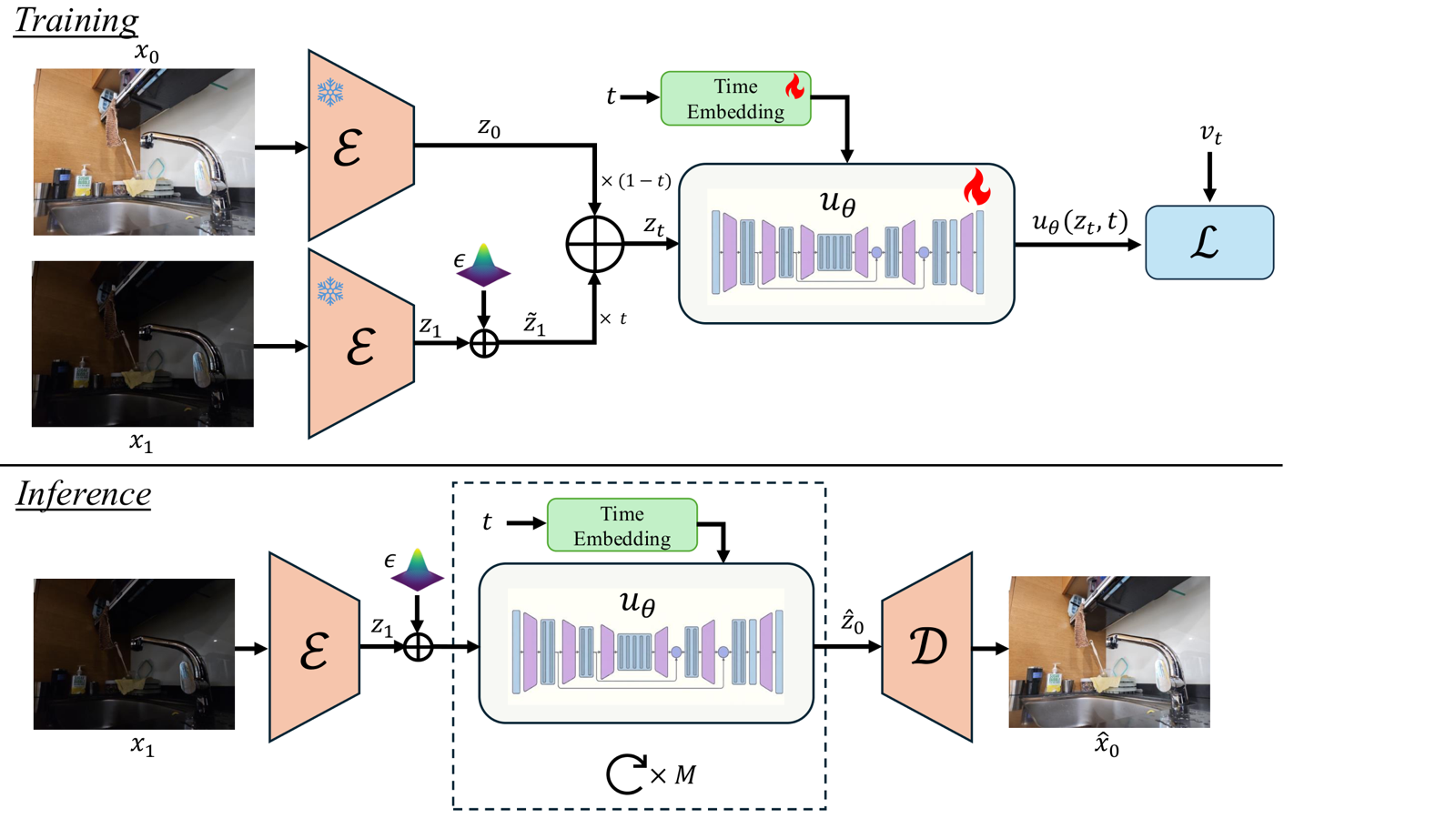
Low-light images are encoded with a frozen Stable Diffusion VAE1 before restoration.
NTIRE Workshop · CVPR 2026 · AI Research · Arm
Latent Flow-Matching for Low-Light Image Enhancement
1 AI Research (AAIR), Arm Ltd
Overview
Single-shot image low light enhancement (SSLIE) must recover visibility while preserving natural colour, fine texture, and scene structure. LFM-LLIE approaches this restoration problem in a compact latent space, where a conditional flow-matching model learns how to transport low-light image representations toward normal-light representations.
The Arm AI Research (AAIR) team developed LFM-LLIE for the NTIRE 2026 Low-Light Image Enhancement Challenge, held as part of CVPR 2026. The method combines a frozen image encoder-decoder with an HDiT-based flow model and ODE-driven inference.
It won the challenge's non-reference track, demonstrating strong perceptual quality in benchmark evaluation while also highlighting the continuing need for real-world validation.
How it works
LFM-LLIE replaces direct pixel-level enhancement with a learned path through latent space. The released challenge pipeline can be understood in five stages.
Low-light images are encoded with a frozen Stable Diffusion VAE1 before restoration.
The model learns a conditional velocity field2 that transports low-light latents toward clean-image latents.
The flow model is parameterized with an HDiT3-based architecture to capture both global illumination structure and local texture details.
A small Gaussian perturbation is added to the low-light latent during training to improve robustness and stabilize optimization.
At test time, enhancement is obtained by iteratively solving the learned latent ODE and decoding the final latent with the frozen VAE decoder.
1 Robin Rombach, Andreas Blattmann, Dominik Lorenz, Patrick Esser, and Björn Ommer. High-Resolution Image Synthesis With Latent Diffusion Models. CVPR, 2022. ↩
2 Yaron Lipman, Ricky T. Q. Chen, Heli Ben-Hamu, Maximilian Nickel, and Matthew Le. Flow Matching for Generative Modeling. ICLR, 2023. ↩
3 Katherine Crowson, Stefan Andreas Baumann, Alex Birch, Tanishq Mathew Abraham, Daniel Z. Kaplan, and Enrico Shippole. Scalable High-Resolution Pixel-Space Image Synthesis with Hourglass Diffusion Transformers. ICML, 2024. ↩
Challenge outcome
The AAIR team's proposed solution came first against 22 participating research teams from both industry and academia.
| Rank | Non-Reference Track | Reference Track | |||||||||
|---|---|---|---|---|---|---|---|---|---|---|---|
| Team | MoS ↑ | NIQUE ↓ | MUSIQUE ↑ | CLIPIA ↑ | Score ↑ | Team | PSNR ↑ | SSIM ↑ | LPIPS ↓ | Score ↑ | |
| 1 | AAIR-LAB | 7.30 | 4.6992 | 31.62 | 0.3752 | 80.83 | SYSU-FVL | 20.71 | 0.6773 | 0.4802 | 94.80 |
| 2 | SNUCV | 5.90 | 4.8965 | 32.18 | 0.4216 | 73.83 | WHU-MVP | 19.75 | 0.6729 | 0.4880 | 87.77 |
| 3 | BAU-Vision | 9.00 | 6.7578 | 24.80 | 0.1977 | 61.47 | KLETech-CEVI | 19.96 | 0.6706 | 0.5340 | 84.59 |
| 4 | PSU | 7.40 | 6.4359 | 28.36 | 0.2484 | 59.64 | BITssvgg | 20.74 | 0.6482 | 0.5955 | 80.28 |
| 5 | TranssionAI | 7.00 | 6.2586 | 26.58 | 0.2874 | 58.21 | BAU-Vision | 18.99 | 0.6308 | 0.4572 | 79.52 |
| 6 | SYSU-FVL | 6.80 | 6.5289 | 26.11 | 0.3060 | 56.23 | SNUCV | 18.00 | 0.6328 | 0.4242 | 76.93 |
| 7 | NTR | 6.85 | 6.6029 | 27.89 | 0.2724 | 56.02 | YuFans | 17.81 | 0.6527 | 0.4993 | 72.28 |
| 8 | YuFans | 6.75 | 6.2365 | 27.61 | 0.2436 | 54.54 | AAIR-LAB | 18.81 | 0.5649 | 0.4231 | 71.29 |
| 9 | WHU-MVP | 6.65 | 5.8908 | 26.68 | 0.2465 | 54.49 | TranssionAI | 17.40 | 0.6532 | 0.4887 | 70.86 |
| 10 | ReagvisLabs | 6.20 | 5.7119 | 26.38 | 0.2541 | 52.25 | ReagvisLabs | 18.48 | 0.6337 | 0.5269 | 70.85 |
| 11 | KLETech-CEVI | 7.10 | 7.6378 | 25.90 | 0.2775 | 50.73 | DH-XHDL-Team | 18.60 | 0.6310 | 0.5641 | 67.83 |
| 12 | BITssvgg | 7.20 | 7.4701 | 24.18 | 0.2700 | 49.51 | NTR | 16.82 | 0.6371 | 0.5323 | 61.14 |
| 13 | MC2 | 4.80 | 4.1567 | 23.47 | 0.3023 | 49.35 | VesperLux | 18.07 | 0.5350 | 0.5060 | 55.04 |
| 14 | DH-XHDL-Team | 6.25 | 6.7755 | 25.53 | 0.2696 | 47.59 | PSU | 15.07 | 0.6012 | 0.5303 | 45.45 |
| 15 | VesperLux | 5.50 | 5.7577 | 20.09 | 0.2328 | 37.32 | SOMIS-LAB | 15.32 | 0.5642 | 0.5368 | 40.66 |
| 16 | SOMIS-LAB | 2.50 | 7.3967 | 26.98 | 0.2763 | 19.60 | MC2 | 16.53 | 0.4616 | 0.5757 | 28.45 |
| 17 | AnanyaHariniLaksh | 2.15 | 11.1732 | 19.11 | 0.2729 | -11.33 | AnanyaHariniLaksh | 17.05 | 0.4957 | 0.8003 | 16.94 |
AAIR-LAB ranked first in the non-reference LLIE track with a final score of 80.83.
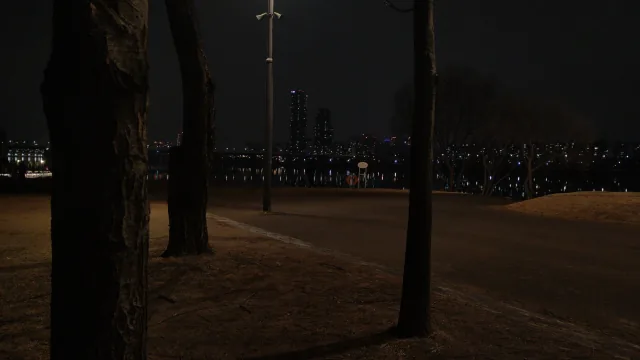 Low Light
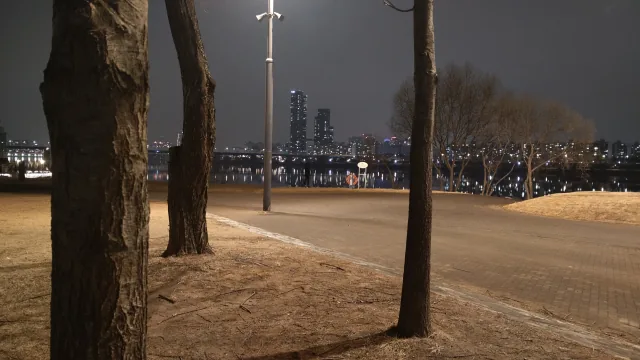 GT
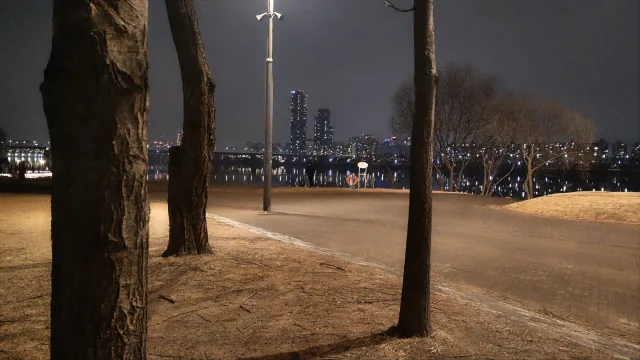 LFM-LLIE
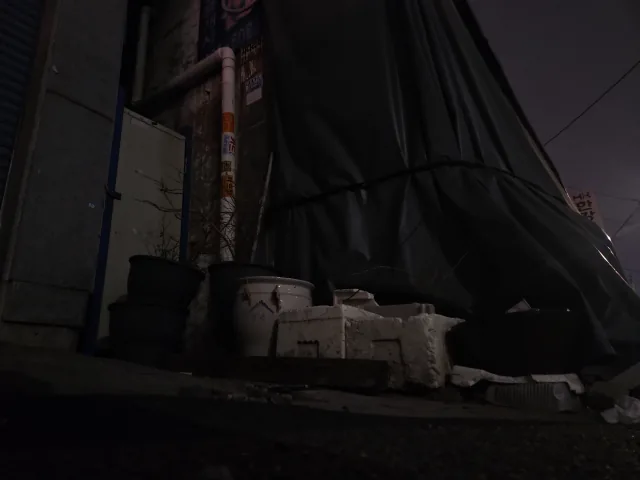 Low Light
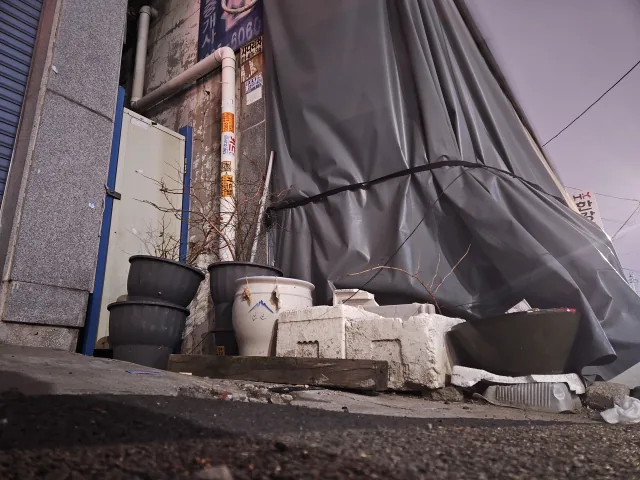 GT
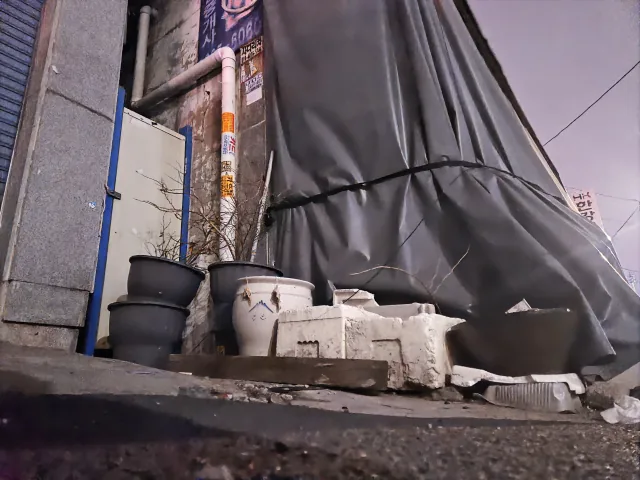 LFM-LLIE
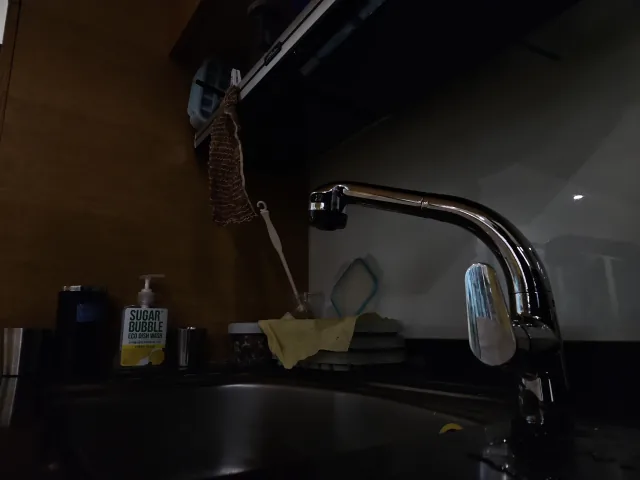 Low Light
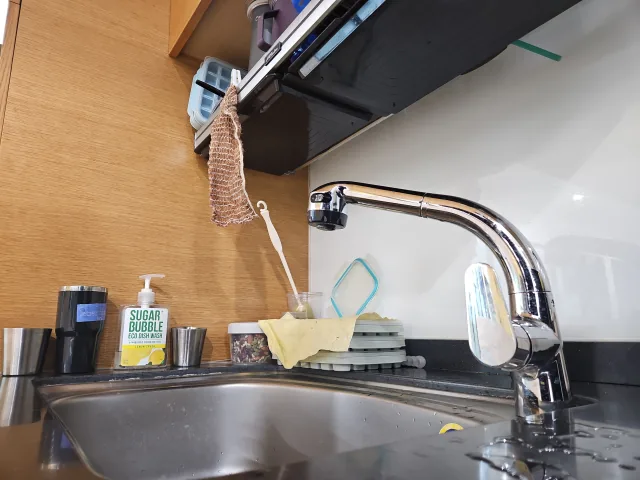 GT
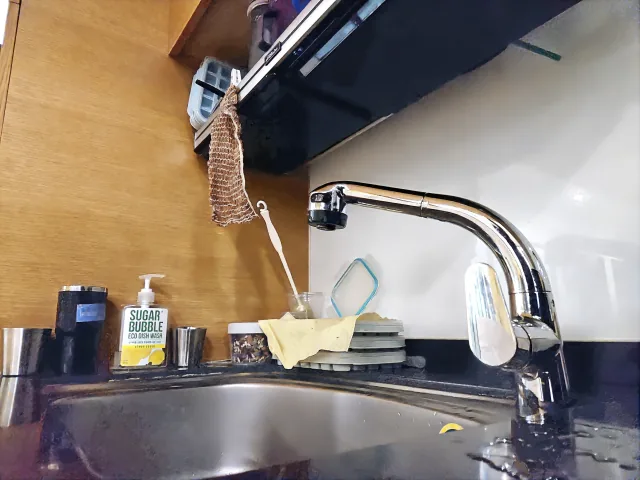 LFM-LLIE
Citation
Cite the official CVPR Workshops challenge report, which describes LFM-LLIE in Section 3.8:
@InProceedings{Ciubotariu_2026_CVPR,
    author    = {Ciubotariu, George and A, Sharif S M and Rehman, Abdur and Dharejo, Fayaz Ali and Naqvi, Rizwan Ali and Conde, Marcos V and Timofte, Radu and Jin, Zhi and Wu, Hongjun and Zhang, Wenjian and Ye, Chang and Yi, Xunpeng and Yan, Qinglong and Zhang, Yibing and Akalwadi, Nikhil and I Pattanshetty, Varda and I Pattanshetty, Varsha and Desai, Padmashree and Mudenagudi, Uma and Tabib, Ramesh Ashok and Yang, Hao and Zhang, Ruikun and Pan, Liyuan and Kinli, Furkan and Ryou, Donghun and Ha, Inju and Kang, Junoh and Han, Bohyung and Zhou, Wei and Haitman, Yuval and Lapid, Ariel and Peretz, Reuven and Diamant, Idit and Cao, Leilei and Zhang, Shuo and Hambarde, Praful and Shaily, Prateek and Kumar, Jayant and Sharma, Hardik and Negi, Aashish and Chaudhary, Sachin and Dudhane, Akshay and Shukla, Amit and Wu, MoHao and Wang, Lin and Tu, Jiachen and Xu, Guoyi and Jiang, Yaoxin and Liu, Jiajia and Shi, Yaokun and Balmez, Raul and Brateanu, Alexandru and Orhei, Ciprian and Ancuti, Cosmin and Ancuti, Codruta O. and Benjdira, Bilel and Ali, Anas M. and Boulila, Wadii and Qiao, Kaifan and Chen, Bofei and Xu, Jingyi and Zhang, Duo and Deng, Xin and Xu, Mai and Li, Shengxi and Jiang, Lai and A, Harini and N, Ananya and K, Lakshanya and Xu, Ying and Zhu, Xinyi and Shi, Shijun and Zhang, Jiangning and Liu, Yong and Hu, Kai and Xu, Jing and Zeng, Xianfang and Song, Jinao and Tang, Guangsheng and Li, Cheng and Yang, Yuqiang and Wang, Ziyi and Chen, Yan and Bao, Long and Sun, Heng and Kishawy, Mohab and Chen, Jun and Siu, Wan-Chi and Cheng, Yihao and Lee, Man Hammond and Hui, Chun-Chuen},
    title     = {Low Light Image Enhancement Challenge at NTIRE 2026},
    booktitle = {Proceedings of the IEEE/CVF Conference on Computer Vision and Pattern Recognition (CVPR) Workshops},
    month     = {June},
    year      = {2026},
    pages     = {1741-1753}
}